Computational Photography: Strengths and Realities
Smartphone cameras do not behave like traditional large-sensor DSLR or mirrorless cameras. Because physical aperture sizes are fixed in most models, dynamic range and depth-of-field are generated mathematically.
For journalistic field documentation and documentary videography, this computational assistance is invaluable. Modern phones record 10-bit Log video profiles directly onto external USB-C Solid State Drives, providing colorists with sufficient dynamic latitude for commercial delivery. Yet for high-speed sports or low-light telephoto capture, the physics of miniature glass optics still introduce digital noise and aggressive smoothing artifacts.
Mobile Academic and Field Research
Conducting investigative research on mobile devices has matured beyond browsing bookmarks. Contemporary research workflows leverage specialized pocket tooling:
- Automated Citation Gathering: Scanning physical ISBN barcodes or digital DOI strings via the camera lens to fetch bibliographic metadata into local reference databases.
- Offline EPUB/PDF Annotation: Marking primary source documents with bidirectional links that connect marginal notes directly into personal research wikis.
- Audio Field Interviews: Capturing high-resolution linear PCM WAV audio while simultaneously running on-device neural transcription to mark time-coded thematic highlights.
The Creative Bottleneck: Ergonomics vs. Mobility
Recognizing Touchscreen Limitations
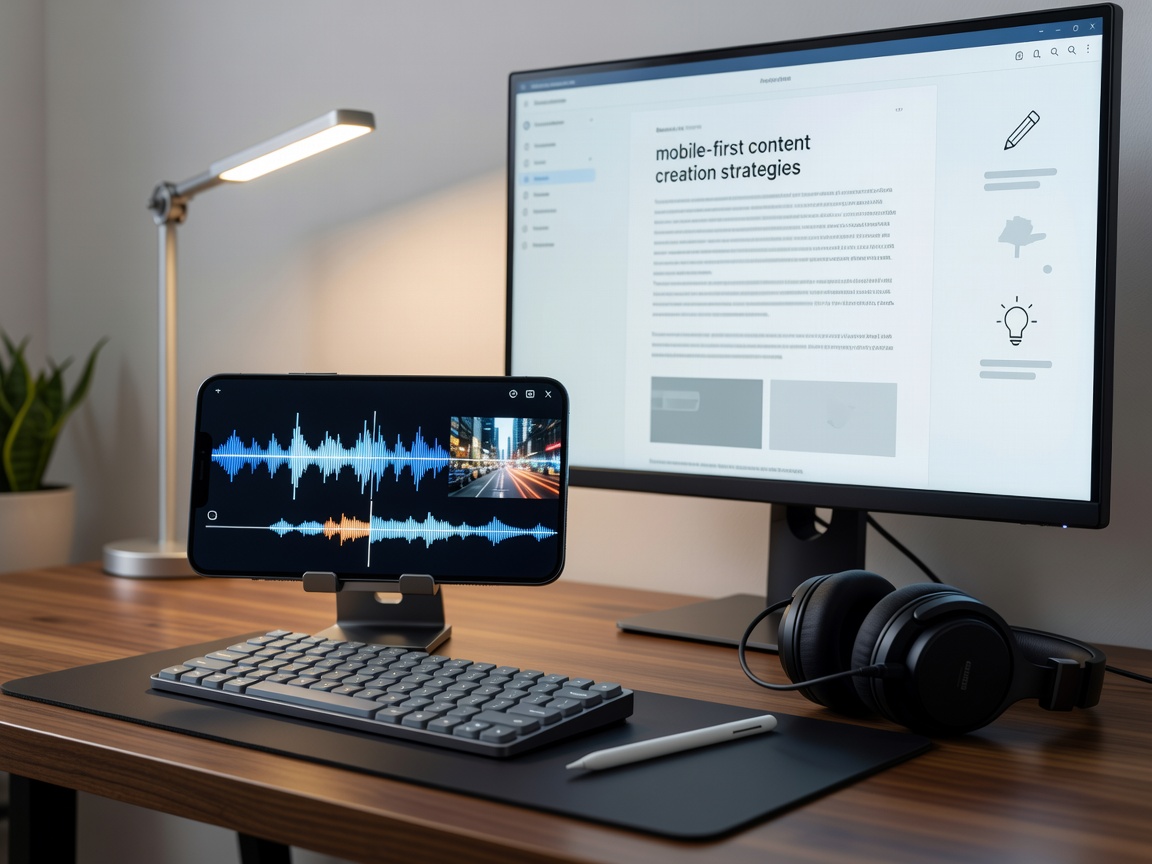
While smartphones can color-grade video and synthesize text, touchscreens remain poorly suited for sustained multi-hour typography layout, complex audio scrubbing, or precision vector illustration.
Treat the smartphone as an agile field instrument. Gather raw photographic footage, capture voice observations, record documentary interviews, and outline conceptual structures while moving. Reserve final mastering, typesetting, and detailed citation verification for dual-monitor desktop environments.
| Field Task | Mobile Feasibility | Recommended Tooling Mechanism | Primary Constraint |
|---|---|---|---|
| Primary Source Capture | Excellent | Document scanner + OCR | Perspective skew under uneven lighting |
| Rough Cut Video Assembly | High | Timeline magnetic editor | Touchscreen precision on micro-trims |
| Deep Literature Review | Moderate | Offline PDF reader + styluses | Screen boundary restricts multi-window cross-referencing |
Source Evaluation in the AI Era
With the rapid proliferation of synthetic internet content, mobile researchers must verify source credibility directly from the phone. Look for transparent cryptographic provenance metadata (such as C2PA standards embedded in camera image files) and confirm digital signatures on web-retrieved research papers before referencing them in academic work.
Good For:
- Conducting spontaneous field interviews with immediate timestamped transcription.
- Cataloging archival library sources via high-resolution macro photography and text conversion.
- Color-grading and publishing news segments directly from remote event locations.